
Secure Your Site
In Month 01 you did the groundwork. You wrote a brief that describes how you want to live, drafted an outline cost plan, and appraised the sites on your shortlist against orientation, topography, access, utilities and the rest.
Now one of those sites stands out. It meets your brief. The numbers work. You can picture the house on it.
This is the moment many self-builders lose momentum, or lose the plot altogether. Month 02 is about acting on your appraisal: securing the site you have chosen, quickly, and on terms that protect you.
Move quickly, but know your options
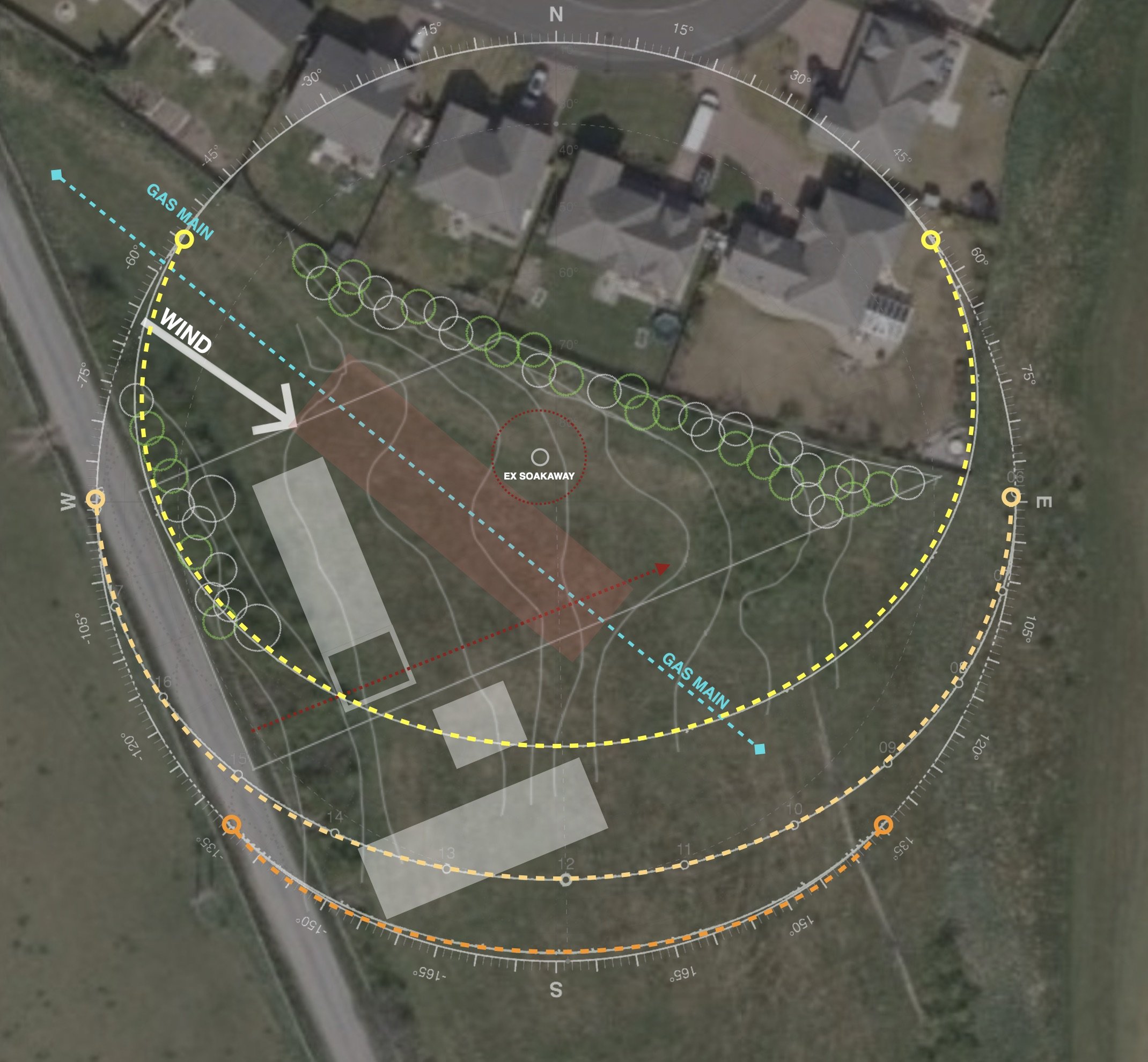
Once you have identified a site that meets your requirements, the important thing is to secure it as quickly as you can. A site that suits your brief, and suits a Passivhaus, with the right orientation and a sensible slope, is worth acting on.
What surprises most people is that there is more than one way to secure a site. Buying it is the obvious one. It isn't the only one. Which route suits you depends largely on a single question.
Does the site already have planning permission?

Route one: purchase outright
The simplest way to secure a site is to buy it.
Perhaps the site already has full planning permission for a new home. That can feel like the hard part done, and in some ways it is. But a planning consent is granted for a particular design, often someone else's, with conditions attached.
So before you buy, read the case officer's report on the planning application. It sets out the key points and the planning policies the consent has addressed, and it is usually published alongside the decision on the planning authority's website.
Then contact the local planning authority. Discuss any key constraints the existing consent carries. Take the opportunity to speak to the case officer about whether there is scope to change the design so it meets your own requirements.
That conversation tells you something important: how much of the finished home can genuinely be yours. A consent that leaves little room for change may still be the right site, but you should know that before you commit.
Route two: the option agreement
If your site doesn't have planning consent, you can still secure it, using what is called an option agreement.
An option agreement is a legally binding contract that compels you to purchase the site should you gain full planning consent. It is particularly useful on sites that have no planning consent associated with them at all.
The protection is in the other half of the deal. Should you be unable to secure the consent you need, the option allows you simply to walk away, with no obligation to purchase.
Options are usually time limited, often to somewhere around 12 to 18 months. That keeps the timescale reasonable, and it protects both parties: the seller isn't tied up indefinitely, and you have a defined window to take the design through planning.
For anyone used to managing risk, that is the appeal. An option turns the biggest uncertainty on an unconsented site into something you can plan around rather than something you have to absorb.
Before you sign: check the services
Whichever route you take, there is one check I would never skip.
Sites are often sold without service connections: water, electricity, gas and telecoms. Bringing those services to a site can be difficult and very costly, especially on the rural plots so many of our clients are drawn to.
We therefore recommend proper due diligence before you enter into any form of legal agreement to purchase:
Validate any servicing claims made by the vendor. "Services nearby" is not the same as "services available".
Check the availability of each service, and how it would reach your plot.
Check the cost of installation and connection, and add it to your outline cost plan from Month 01.
You can also place a condition on the purchase that obliges the seller to service the plot before you buy. Be aware, though, that such conditions often carry a monetary limit, so read the detail.
Choose a Solicitor who knows land deals

As with any legal agreement, take advice from a solicitor before you sign anything. And not just any solicitor.
Endeavour to work with a solicitor who is familiar with the details and nuances of land acquisition. Family conveyancing solicitors often aren't familiar with these deals, and option agreements in particular need careful drafting.
Three simple questions help:
1. What is your experience of land acquisition?
2. Have you drafted or negotiated option agreements before?
3. Can I speak to previous clients about their experience?
A solicitor who answers those well is worth their fee many times over.
Month 02 in Four Steps
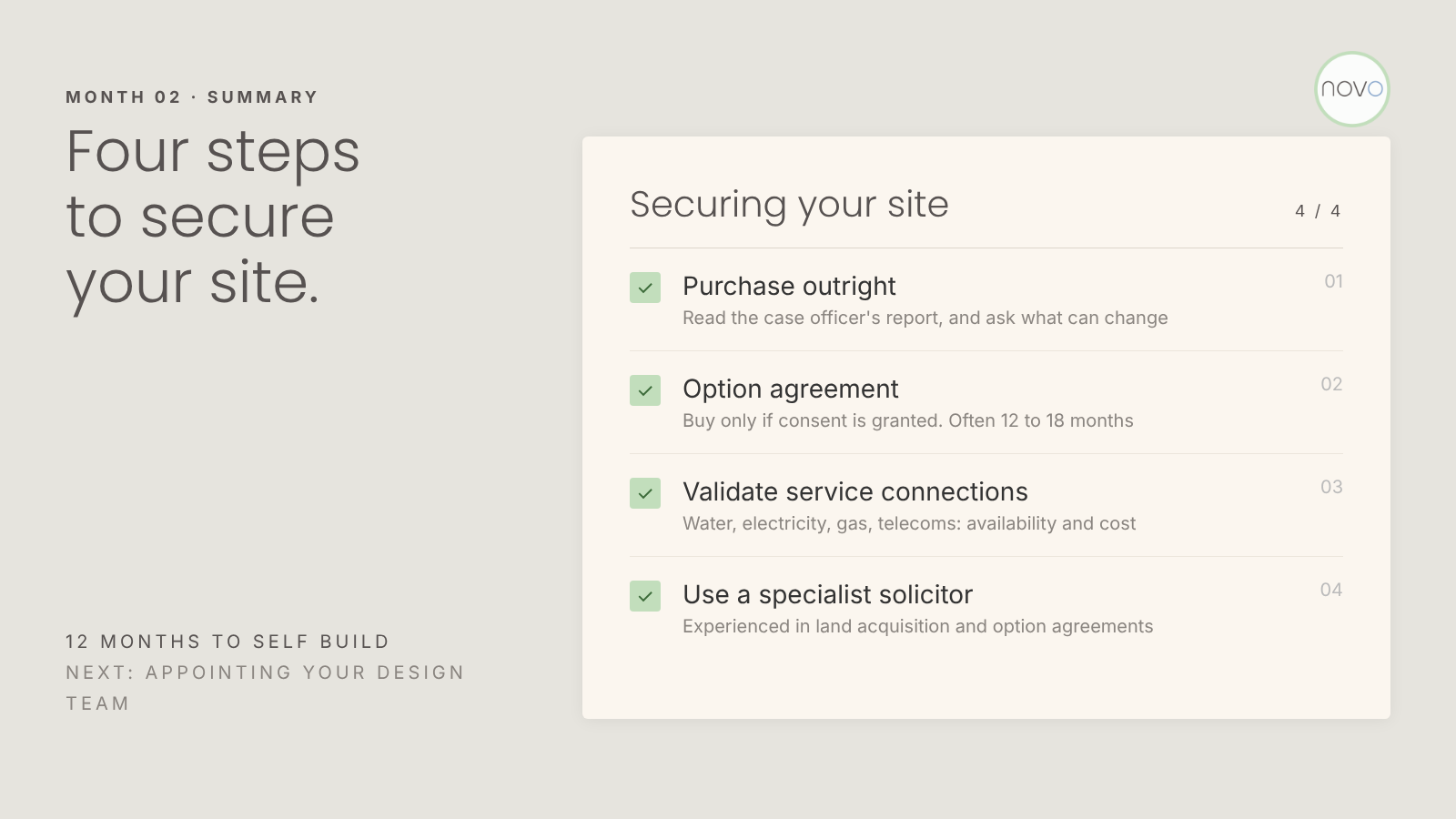
1. Purchase outright, once you have read the case officer's report and understand what the planning permission allows and whether it can change.
2. Take an option where there is no consent yet, so you only buy if planning is granted.
3. Validate the services, and check availability and cost before you sign.
4. Use a specialist solicitor, experienced in land acquisition and option agreements.
With your site secured, you can begin to plan your new home in real terms. That is a significant milestone, and it deserves a moment.